
Why buy new when the good frame is already yours?
Sagging cushions, loose arms, broken springs and tired mechanisms — fixed for a fraction of what replacing the piece would cost.

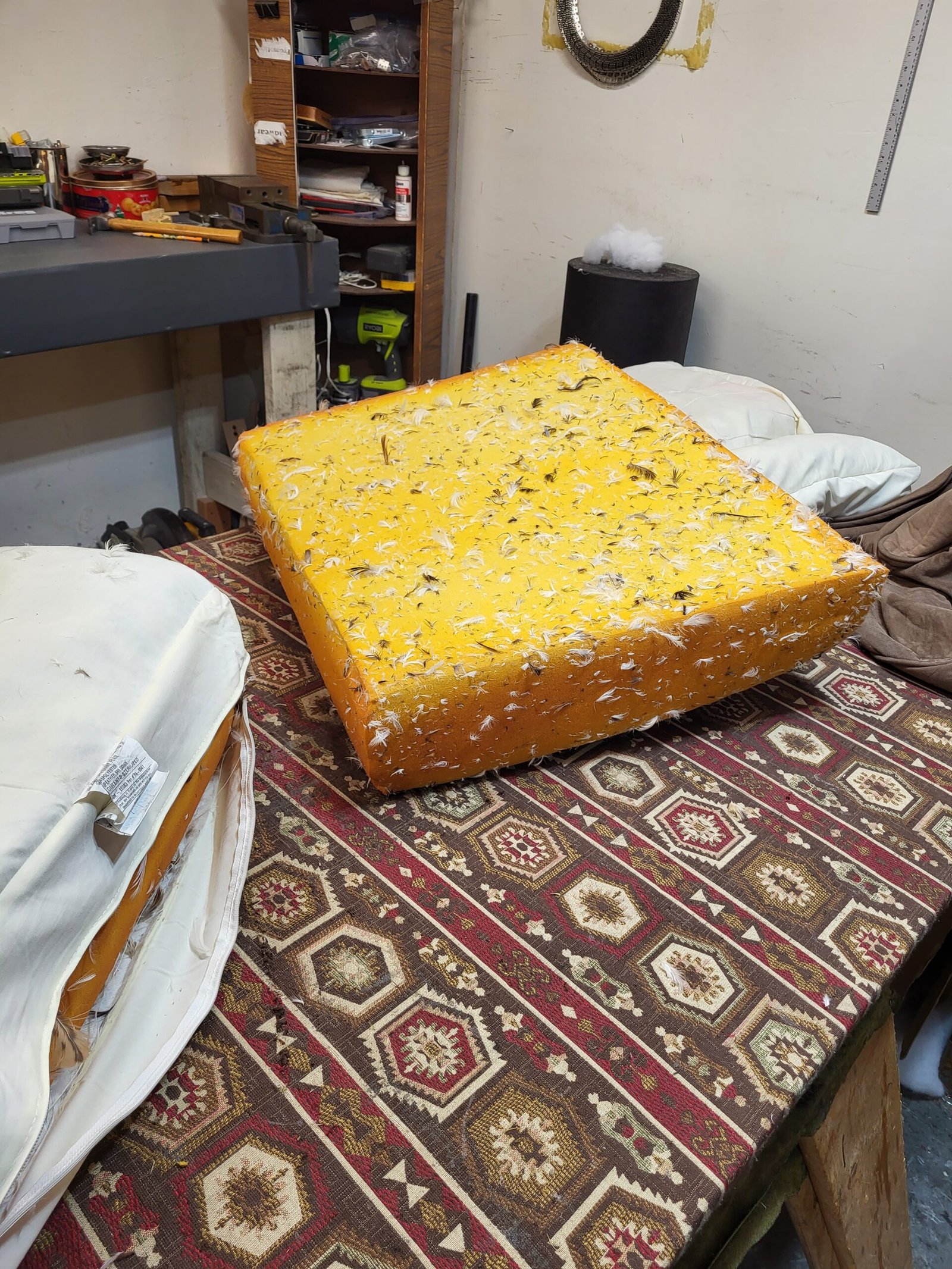
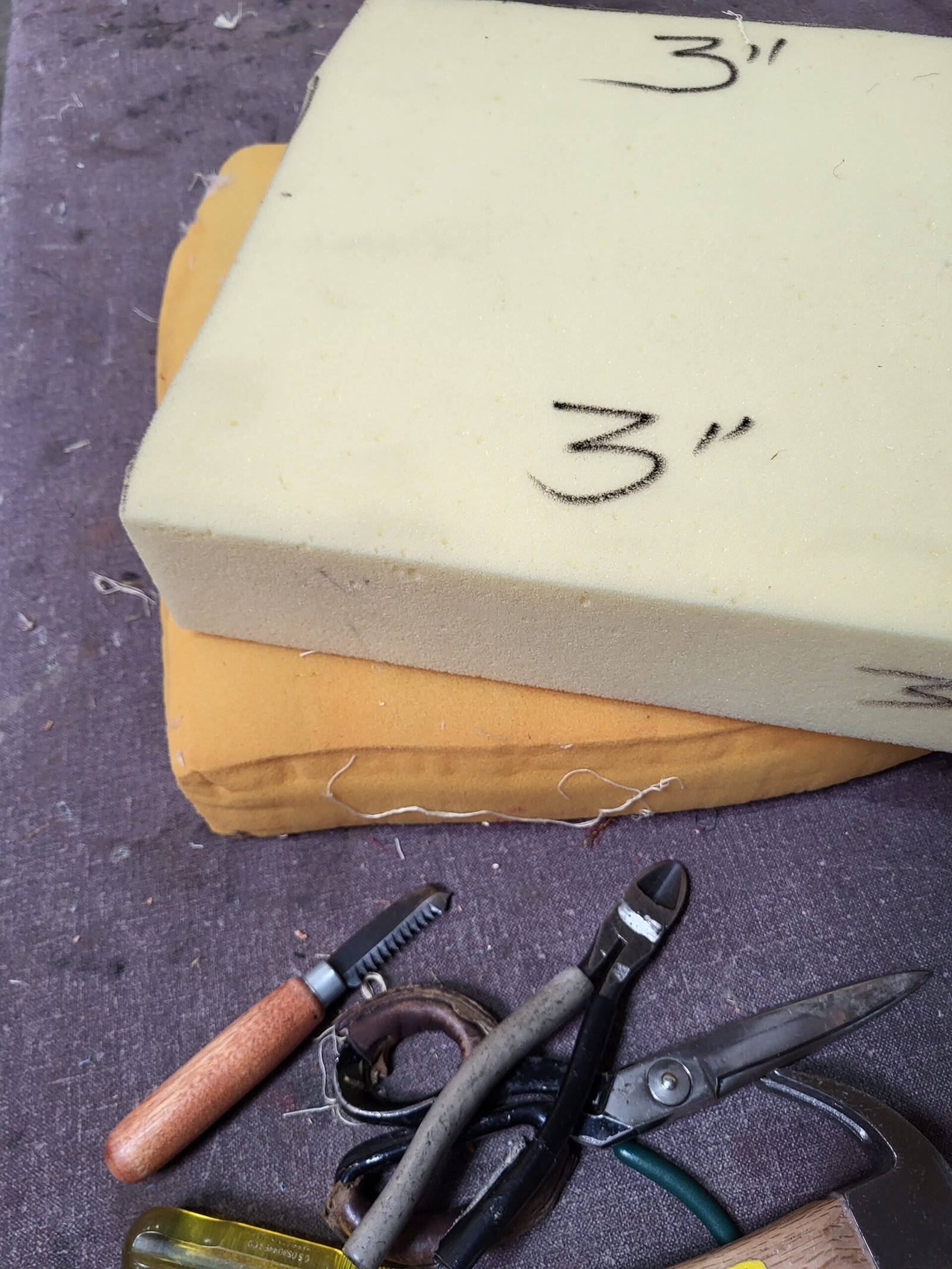
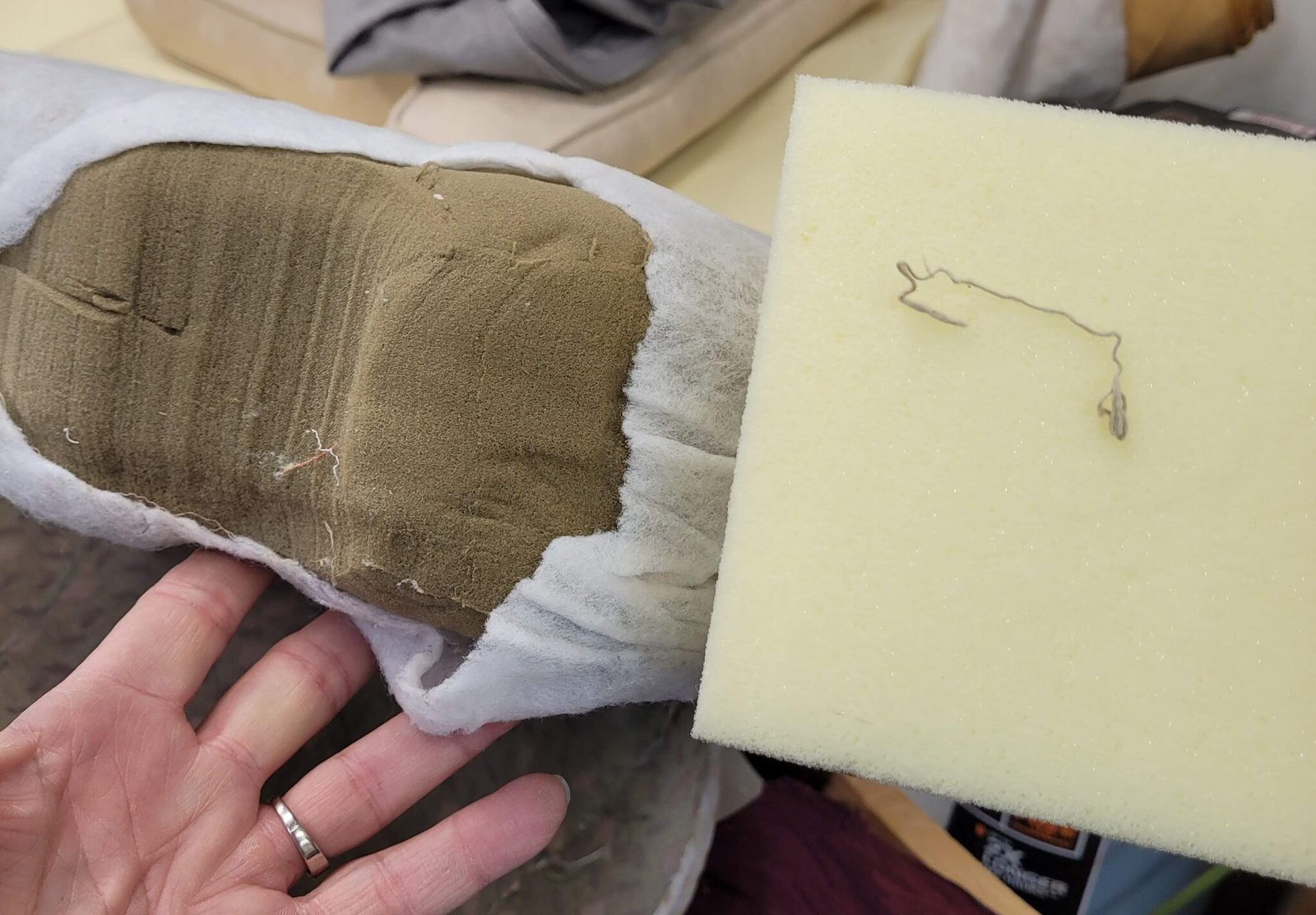
New foam, top. Twenty years of sitting, below.
Foam has a lifespan. Yours has probably reached it.
Polyurethane foam breaks down from the inside. It compresses, yellows, loses its spring, and eventually crumbles into dust that works its way out through the seams.
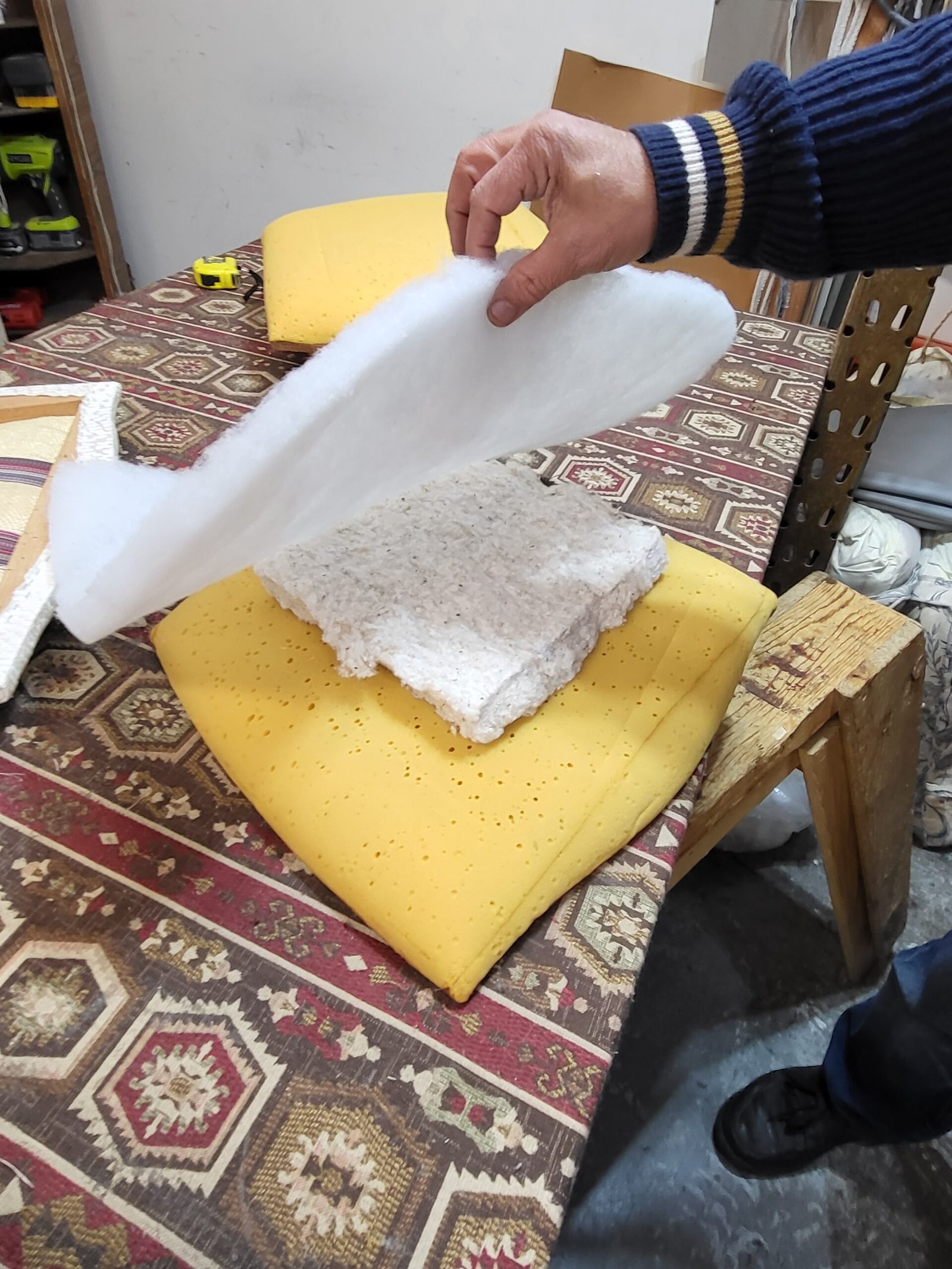
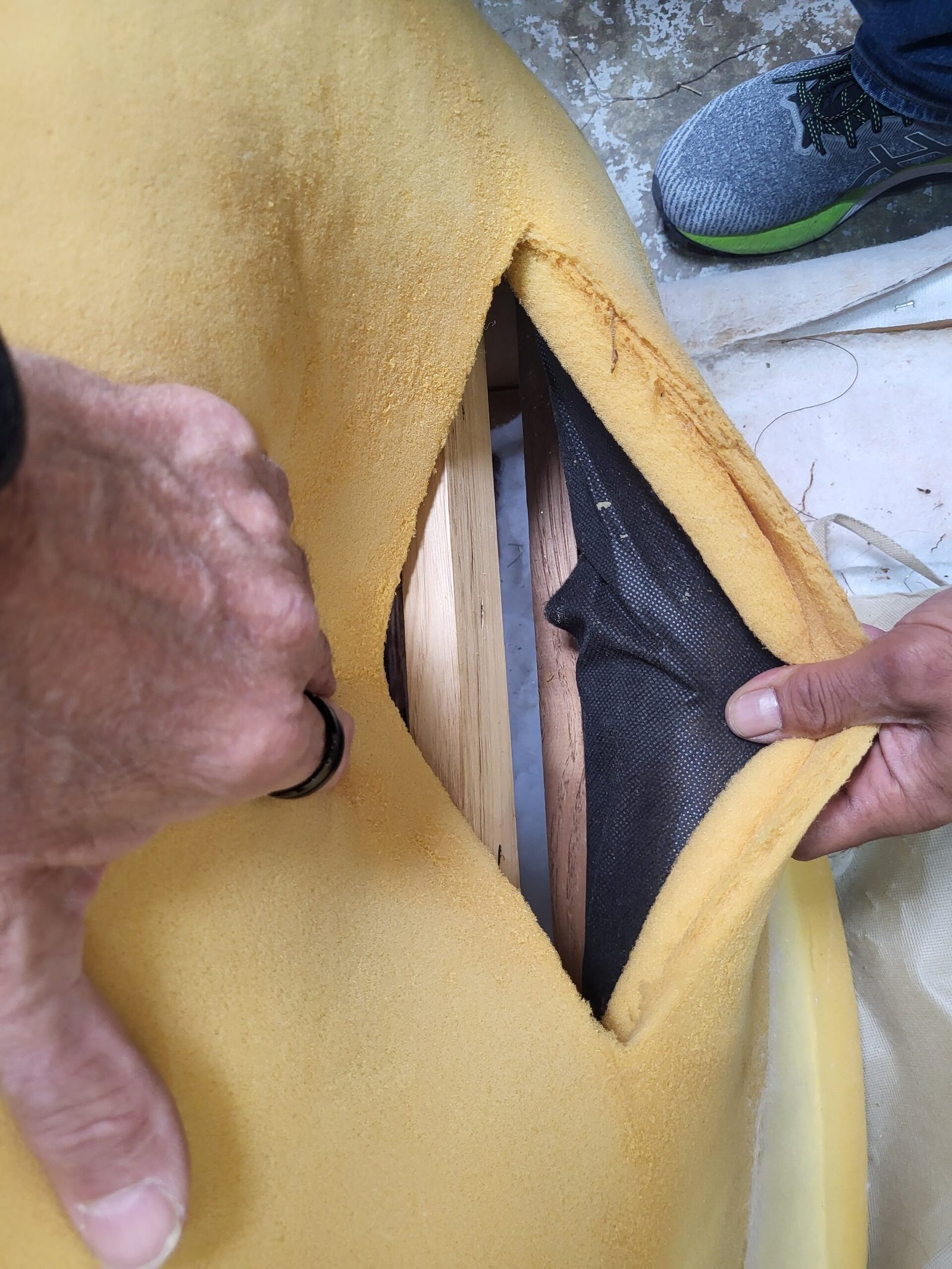
There is no rescuing it at that point — but there is nothing wrong with the frame underneath. We cut new high-density foam to the exact profile of your cushion, wrap it in fresh dacron so it has a soft crown rather than a hard edge, and put your existing cover straight back on if it is still in good shape.
- Foam cut to your cushion, not bought in a standard block
- Density matched to how the piece is actually used
- Fresh dacron wrap for a proper crowned edge
- Pillow backs and fiber-filled cushions refilled
- Existing fabric reused wherever it is still sound
What replacing a cushion actually involves.
Scroll through the stages — these are real cushions from real jobs, not stock photography.

If you have broken it, we have probably fixed it.
Broken chairs, couches, tables, dressers and antique pieces — repaired or fully restored. Our skilled technicians can also handle basic repairs in your own home when moving a heavy piece is impractical.
Springs & webbing
Sagging seats, snapped webbing and coil springs that have come untied. Retied by hand the way they were originally built, not stapled back down.
Frames & joints
Loose arms, wobbling legs, split rails and failed glue joints. Taken apart, cleaned, re-doweled and clamped so the repair outlasts the original joint.
Mechanisms
Recliner and lift-chair mechanisms, sofa-bed frames and swivel bases replaced where the original has worn out or seized.
Wood repair
Nicks, scratches, dents, water rings and heat marks. Missing trim and turned parts fabricated to match where a piece has lost something.
Seams & tears
Split seams, popped buttons, torn welting and small leather tears — repaired in place where the rest of the cover is still sound.
Damage restoration
Pet damage, water damage, and fire and smoke restoration on pieces worth bringing back.
The maths usually favours repairing.
Furniture built twenty, forty or eighty years ago used kiln-dried hardwood with doweled and corner-blocked joints. Most furniture sold today is stapled engineered board. If your old piece still feels solid when you lift it, that is a frame worth keeping.
- Better bones. Hardwood frames outlast the particle board in most new furniture.
- Exact fit. Keep proportions that already suit your room and your doorways.
- Your choice of fabric. Thousands of options instead of the showroom floor.
- Less waste. A rebuilt sofa is one less sofa in a landfill.
“Why buy new furniture when you can repair yours for a fraction of the cost?”
Foam & repair, answered.
Tell us what feels wrong with it.
Sagging, wobbling, twanging, crumbling — describe it in a sentence and send a photo. We will tell you what it needs and what it costs.